
Community
Empowering The People Through Water Access

Access to clean, reliable water can transform a community. In many rural villages, women and girls spend hours each day collecting water for their families. Community wells can reduce that burden, giving them more time for education, farming, cultural activities, crafts, and supporting their families.
For Marula, community well projects are also part of conservation. When local families have reliable access to water, there can be less pressure on limited water sources shared with wildlife. Creating practical benefits for communities living alongside protected areas can also help strengthen support for wildlife conservation and protecting these important landscapes.
Tourism creates additional opportunities through local employment, skills, and income, helping communities benefit from the wildlife and natural areas around them.
When communities thrive, wildlife and conservation have a stronger foundation.
Supporting Communities through Travel
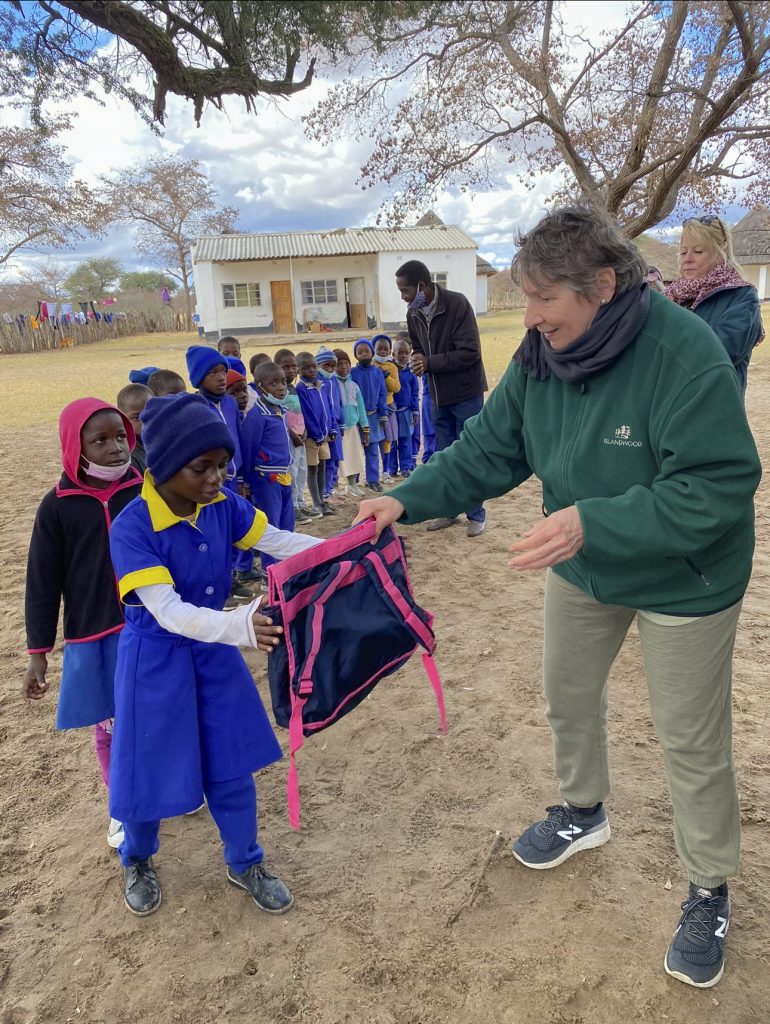
At Marula African Adventures, we believe education is one of the most meaningful ways travel can create lasting change.
Chris’s journey began with a visit to a village school in Zimbabwe, where she saw firsthand how something as simple as unpaid school fees could prevent a child from continuing her education. That experience continues to shape Marula’s commitment to supporting schools and children in the communities we visit.
With the generosity of our guests, Marula supports schools and educational needs in both the communities closest to tourism areas and more remote villages that receive fewer visitors and have fewer opportunities to benefit from tourism. Whether helping children remain in school, supporting essential school needs, or contributing to projects that improve learning environments, our goal is to help create greater opportunities for the next generation.
We believe tourism can do more than bring visitors to Africa. It can help open doors for the people who call Africa home.
Travel with purpose. Experience Africa. Help create opportunities for its next generation.
Connecting with Local Communities
Travel is at its most meaningful when it creates an opportunity for people to meet, learn from one another, and share their cultures.
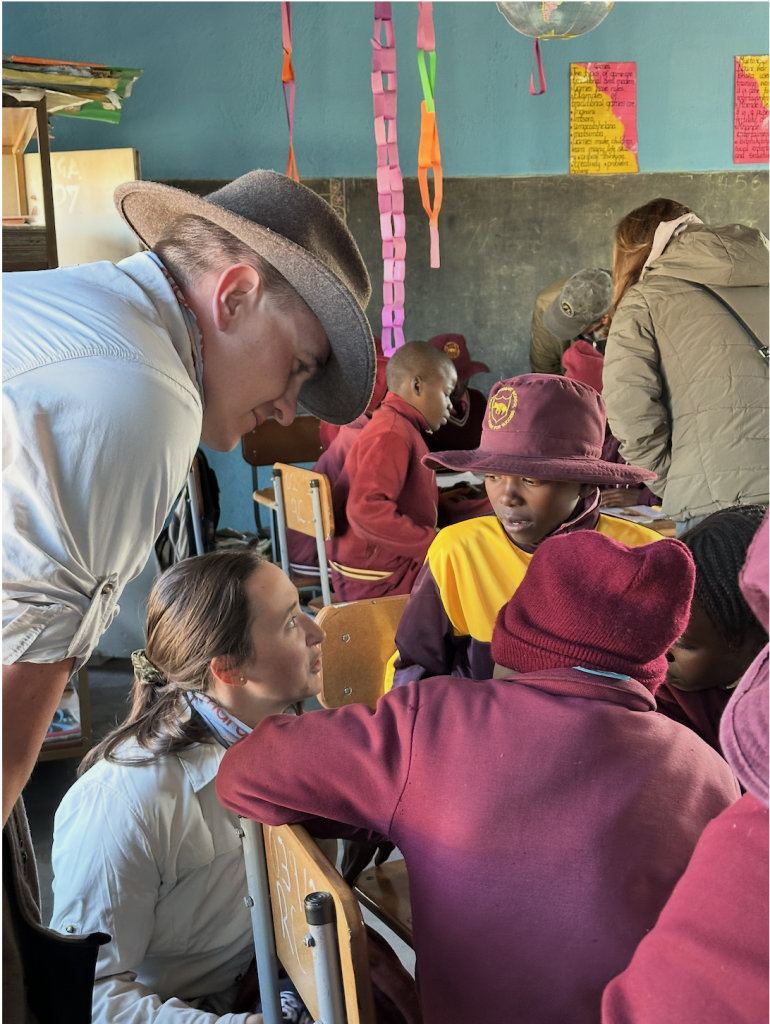
When you travel with Marula, there may be opportunities to visit local villages and schools, meet families and students, and experience aspects of daily life that you would never encounter on a traditional sightseeing trip. Guests can listen to local stories, learn about traditions and daily life, share their own experiences, purchase locally made crafts, and spend time with the people who call these communities home.
These encounters are about more than tourism. They create a genuine two-way cultural exchange—an opportunity for travelers to gain a deeper understanding of Africa while local communities have the opportunity to share their culture, traditions, hopes, and experiences with visitors from around the world.
For many guests, these personal connections become one of the most memorable parts of their journey and inspire them to remain connected to the communities they have met long after returning home.
These relationships can also help strengthen local appreciation for the value of wildlife and the natural areas surrounding their communities. When people experience meaningful benefits from responsible tourism, there is an opportunity to build stronger connections between communities, tourism, and conservation.
Come to Africa not only to see it, but to meet its people, learn from their stories, and share in the richness of their culture.
Community Rhino Conservation Initiative
Launched in May 2022, the Community Rhino Conservation Initiative (CRCI) introduces southern white rhinos to communal lands in Zimbabwe, a historic first. This project, located along the southern boundary of Hwange National Park, enables local people to engage directly with conservation efforts. Tourism generated by rhino viewing provides funds for community development, education, and employment. Forty percent of the fees go back to the community, with the rest supporting conservation projects, ensuring sustainable benefits for all.
Wildlife conservation is often promoted by a few stakeholders and in isolation from other conservation efforts, including that of local and cultural heritage, and of social development efforts. In a rural part of North West Zimbabwe, an innovative project is radically shifting the business-as-usual conservation model; The Community Rhino Conservation Initiative (CRCI) is using tourism to empower community-based conservation and local socio-economic development by putting the local people at the heart of conservation action. CRCI, born out of ecotourism, aims to pioneer a replicable and scalable model of wildlife conservation with exponential benefits for local communities; a way of tackling global issues like poverty and biodiversity loss by aligning wildlife and people rather than putting them against each other.
The Community Rhino Conservation Initiative (CRCI) was launched in May 2022, with, for the first time in history, the introduction of two southern white rhinos on communal land in Zimbabwe. CRCI has been set up along the southern boundary of Hwange National Park on communal land (Tsholotsho Rural District), something that is, given the local context, just shy of extraordinary.
CRCI a culmination of decades of work. CRCI is enabling local people to directly engage with conservation and their natural heritage by having rhinos on their own land and directly benefiting from the tourism that these two rhinos attract. These rhinos on communal land benefit local communities via 1) direct funds from tourist rhino viewing fees 2) education, employment and infrastructure opportunities and 3) more tourists and therefore opportunities for philanthropy. Forty percent of rhino viewing fees go back to a community fund, for them to spend as they see fit. The remaining 60% is used to maintain the existing project, including salaries for over 40 scouts and 20 other workers, as well as to expand the projects into further conservation phases.
Continuing Community Projects
The relationships built through Marula African Adventures continue long after our guests return home. Over the years, the generosity of our guests has helped support a wide range of education, community development, health, conservation, and recreational projects in Zimbabwe.
Projects our guests have supported include:
- Classroom construction and refurbishment
- Student dormitories and dormitory furniture
- School administration buildings
- Classroom furniture and school supplies
- School fees and sponsored students
- School uniforms, shoes, backpacks, and clothing
- Winter coats, hats, and gloves
- School lunches
- Water wells and boreholes
- Solar panels and other essential infrastructure
- Health clinic support
- Community sports and arts recreation centers
- Soccer academies, soccer balls, jerseys, bleachers, and fencing
- Support for rhino introduction and conservation projects
- Equipment for community projects, including weed whackers
- School gates, signs, and other improvements
Some projects are located near established tourism areas, while others reach more remote communities that have fewer opportunities to benefit directly from tourism.
Each project begins with a need identified within a community or school and is made possible through relationships, generosity, and a willingness to help.
For Marula, giving back is part of the journey—not an afterthought to it.


Investing in the Next Generation of Guides
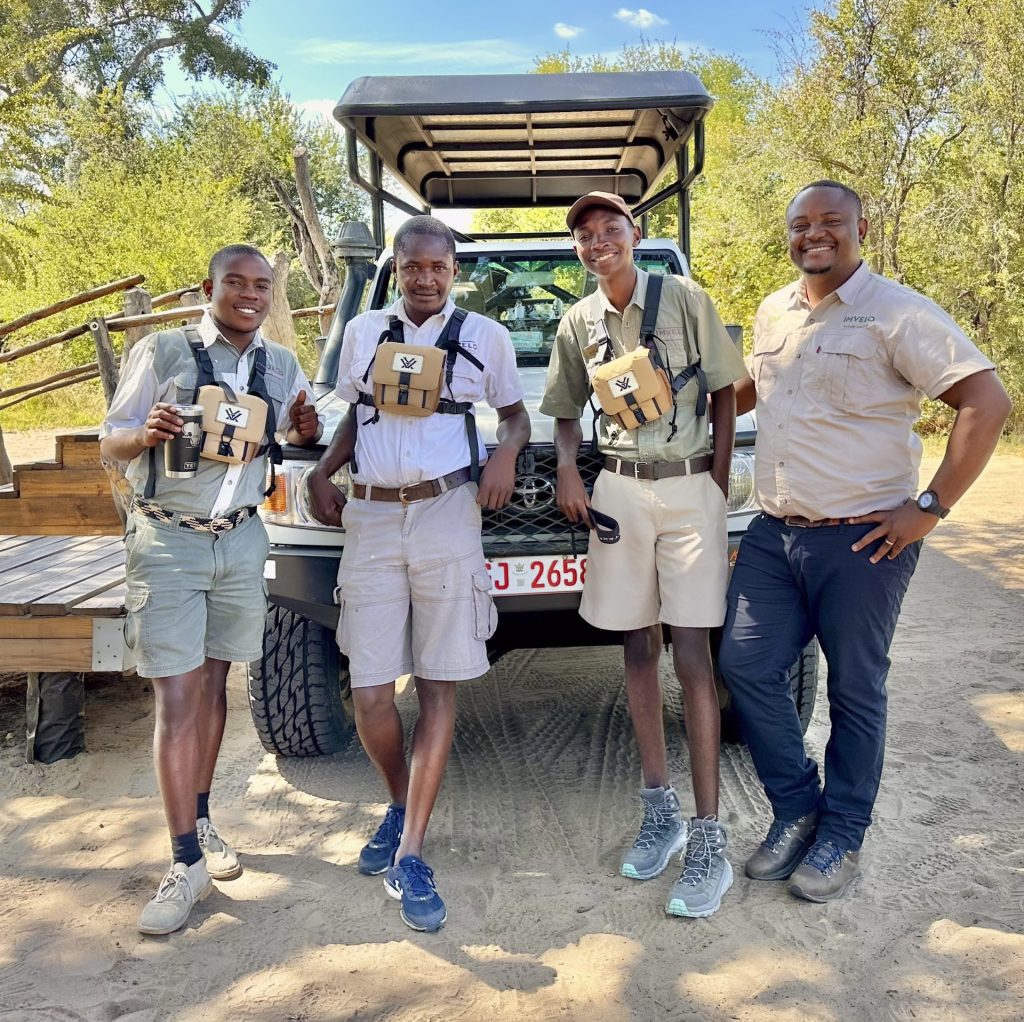
One of the programs especially important to Chris and Vusa is Marula’s mentor program for new Zimbabwean safari guides.
Vusa plays an important role in training and mentoring new guides as they begin their careers. As he works with them, he gets to know their abilities, commitment, and performance in the field. Vusa selects the guides who have earned a pair of binoculars through their dedication and progress.
Chris purchases quality binoculars in the United States and brings them to Zimbabwe. When Marula arrives at Imvelo, Chris and Vusa present the binoculars together to the guides who have earned them.
For a new guide, a good pair of binoculars is more than a piece of equipment. It is an important tool for learning to identify wildlife, developing field skills, and becoming confident in sharing Zimbabwe’s incredible natural world with guests.
For Chris and Vusa, this program is about encouragement, mentorship, and investing in the next generation of Zimbabwean professional guides. It is a small but meaningful way to help talented young guides begin their careers with the tools they need to succeed.
Some projects are located near established tourism areas, while others reach more remote communities that have fewer opportunities to benefit directly from tourism.
Each project begins with a need identified within a community, school, or conservation program and is made possible through relationships, generosity, and a willingness to help.
For Marula, giving back is part of the journey—not an afterthought to it.
Travel with Marula to experience the wildlife, landscapes, and culture of Botswana and Zimbabwe while connecting with the people and communities along the way.

© 2024 Marula African Adventures